If you've ever been fascinated by the vibrant and intricate world of Tibetan Buddhism, you've likely encountered two of its most captivating art forms: the Thangka and the Tsatsa. At first glance, they seem very different. One is a detailed, colorful painting; the other is a small, often unassuming clay impression.
So, what is the core difference?
In the simplest terms: A Thangka is a two-dimensional painting, and a Tsatsa is a three-dimensional sculpture.
This fundamental distinction is the key that unlocks a deeper understanding of their unique roles, functions, and spiritual purposes. While both are sacred objects designed to aid on the path to enlightenment, they speak to the practitioner in different languages and engage different senses. Let's delve deeper into what makes each one special.
The Thangka: The Sacred Blueprint for the Mind
Imagine you need to assemble a complex piece of machinery. You wouldn't do it without a detailed schematic diagram. In the context of Tibetan Buddhism, the Thangka is that schematic for the mind and the universe.
-
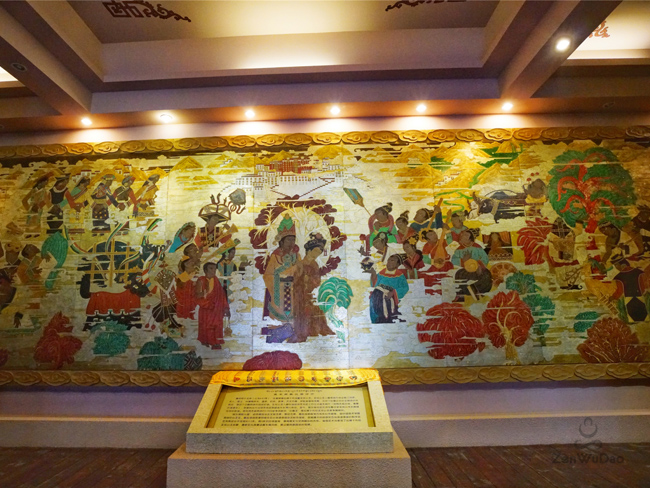
Form: A Thangka is a painted scroll, typically on cotton or silk, framed by a rich brocade. It is not meant to be a permanent wall hanging like a painting in a gallery; it is a mobile spiritual tool, often rolled up and transported for teaching or meditation.
-
Function: Visualization and Contemplation. The primary purpose of a Thangka is to serve as a support for meditation. The intricate imagery is not arbitrary. Every color, symbol, posture, and gesture is meticulously prescribed by ancient texts. It depicts Buddhas, compassionate deities, wrathful protectors, and mandalas (cosmic diagrams).
When a practitioner meditates, they don't just look at the Thangka; they enter into it. They use it as a visual guide to construct the deity and their pure realm in their mind's eye with perfect clarity. This process, known as deity yoga, is not about worshipping an external god. It is a profound method of recognizing that the qualities of the deity—be it boundless compassion (like Avalokiteshvara) or piercing wisdom (like Manjushri)—are latent within one's own mind. The Thangka is the map that helps you navigate to that inner reality.
In essence, a Thangka is a sacred blueprint for inner transformation.
The Tsatsa: The Portable Imprint of Blessing
Now, imagine you want a tangible, physical reminder of a sacred presence that you can carry with you or place in your immediate environment. This is the role of the Tsatsa.
-
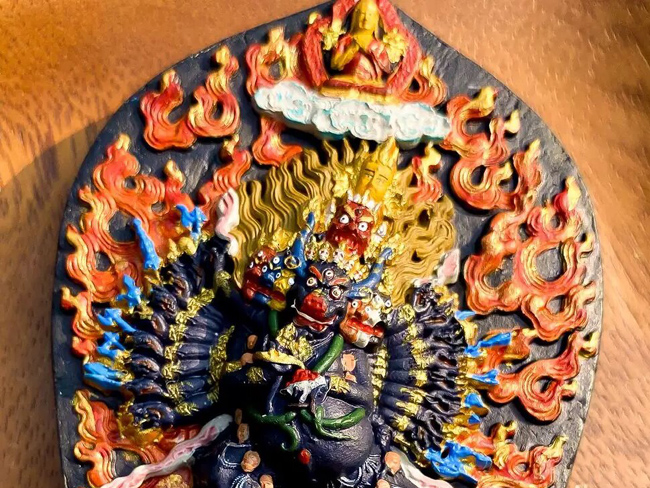
Form: A Tsatsa is a small, relief-style sculpture made by pressing moist clay into a carved mold. They are often left in their natural terracotta color or are lightly painted. They depict the same enlightened beings as Thangkas—Buddhas, Bodhisattvas, and especially stupas (symbolic monuments representing the enlightened mind).
-
Function: Merit-Making and Consecration. The creation and distribution of Tsatsas are themselves acts of devotion and "merit-making" (accumulating positive karma). The very act of making them—mixing the clay, pressing the mold, and dedicating the positive energy—is a mindful, prayerful practice.
Once consecrated by a lama, a Tsatsa becomes a vessel of blessing. They are not typically used for the complex visualizations of a Thangka. Instead, they are:
-
Placed in thousands upon thousands inside large stupas and statues to "consecrate" them, filling them with sacred energy.
-
Deposited in small roadside shrines, on mountain passes, or near holy sites as offerings and protections for the environment.
-
Carried in a portable shrine box (Gau) around the neck as a personal source of spiritual protection and a reminder of one's commitment.
In essence, a Tsatsa is a portable, tactile imprint of the sacred, meant to infuse one's environment and life with blessing.
A Side-by-Side Comparison
To make the distinction even clearer, let's look at them side-by-side:
Two Paths, One Destination
While their forms and immediate functions differ, Thangkas and Tsatsas are complementary paths leading to the same goal: awakening. The Thangka engages the mind through visual complexity, training it to perceive the world as a pure realm. The Tsatsa engages the world through physical presence, actively seeding it with reminders of enlightenment.
One is not superior to the other; they are different tools in a vast and sophisticated toolkit for personal transformation. The Thangka offers a deep dive into the architecture of enlightenment, while the Tsatsa offers a simple, tangible way to connect with that sacredness at any moment.
So, the next time you see a vibrant Thangka, remember it is an invitation to an inner journey. And when you see a humble Tsatsa, know that it represents the possibility of finding the sacred in the palm of your hand.