In Tibetan Buddhism, art is not decoration; it is a sacred technology integral to the path of awakening. Two of the most profound and ubiquitous art forms are Thangka (scroll paintings) and Tsatsa (miniature clay sculptures). They serve as maps, meditation tools, and vessels of blessing, transforming abstract philosophical concepts into tangible visual experiences. This article explores how these art forms function as bridges between the external world and inner realization.
Thangka: The Painted Mandala of the Cosmos

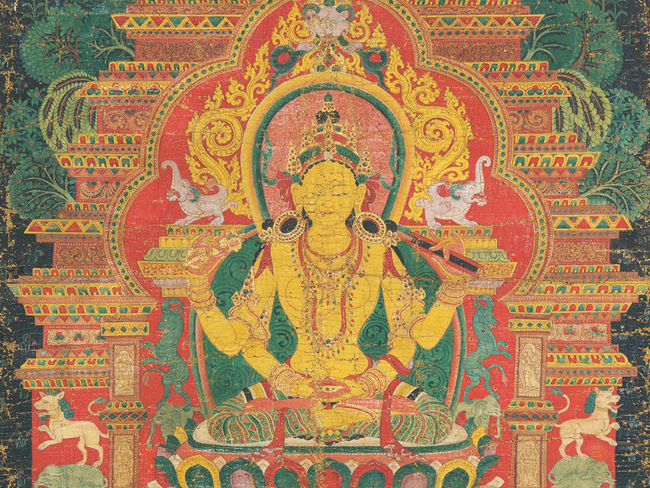
A Thangka is a scroll painting on silk or cotton, renowned for its vibrant colors, intricate details, and iconometric precision. The Chinese Art Newspaper describes it as "the main form of folk painting in Tibetan-inhabited areas," a "representative art form" with a long history and unique techniques . But its purpose is far more profound than aesthetics.
-
A Blueprint for Visualization: The primary function of a Thangka is to support meditation. In Vajrayana practice, a meditator visualizes a specific deity (yidam) in immense detail—their form, color, ornaments, and hand gestures (mudras). The Thangka acts as an external reference and blueprint for this intricate internal process. By gazing at a Thangka of, say, the compassionate Avalokiteshvara (Chenrezig) or the fierce protector Mahakala, the practitioner learns to reconstruct the deity in their mind's eye, ultimately seeking to realize that the deity is a manifestation of their own enlightened nature.
-
Symbolism and Structure: Every element in a Thangka is prescribed by sacred texts and carries symbolic meaning. The proportions of the Buddha's body are defined by the "Measurements of the Body" . Colors represent qualities: blue for tranquility, white for purity, red for power, and gold for enlightenment. The composition is often centered around the main deity, surrounded by a hierarchy of other Buddhas, Bodhisattvas, and lineage masters, mapping out the entire Buddhist cosmos and lineage in a single image.
-
Diverse Styles and Techniques: Thangkas are broadly divided into two categories: "Zhitang" (painted) and "Gultang" (made of silk, e.g., embroidery, appliqué) . Several painting styles evolved, the most prominent being the Menri (school of painting) , known for its peaceful deities and landscapes influenced by Chinese art, and the Karma Gadri style, which emphasizes clarity and spaciousness. The creation of a Thangka is itself a spiritual practice, with artists often being monks or devout laypeople who undergo purification rituals before painting.
Tsatsa: The Portable Sacred
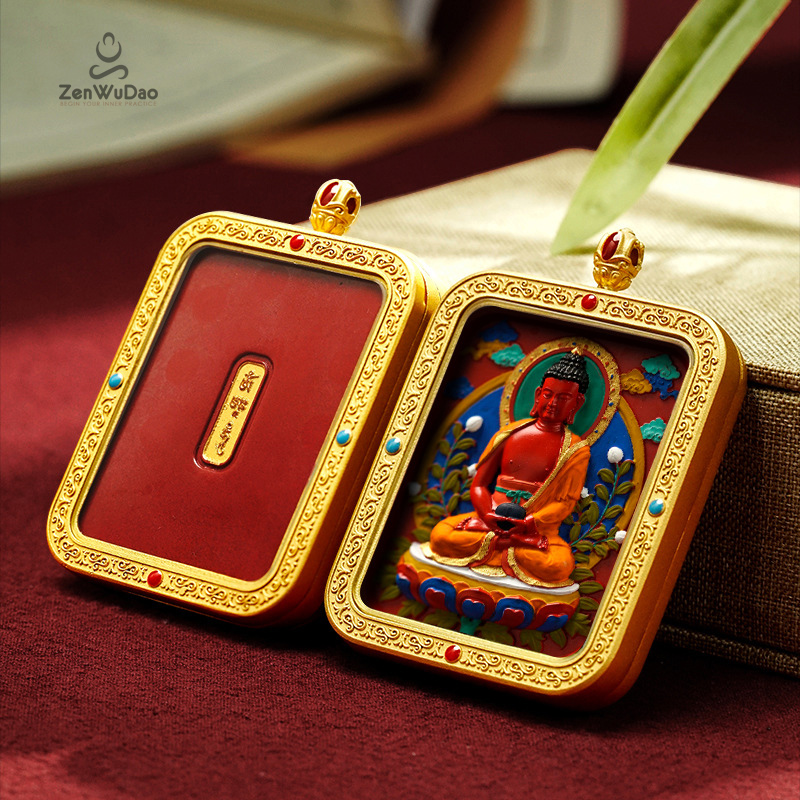
If Thangkas are the grand murals of the path, Tsatsa are its intimate, personal prints. As defined by the China Tibet Information Center, Tsatsa are modeled clay mini-Buddha statues and stupas. These small clay impressions are made by pressing moist clay into a carved mold.
-
A Practice of Merit and Mindfulness: The very act of making Tsatsa is considered a meritorious practice, an act of devotion that accumulates positive karma. As one academic source notes, the practice originated in India and was also prevalent in Tang Dynasty China, where it was known as good karma clay. The maker, often a layperson, engages in a mindful, repetitive process, dedicating the positive energy generated to the benefit of all beings.
-
Functions and Placement: Once made and consecrated by a lama, Tsatsa are considered sacred. They are used for several purposes :
-
"Filling the Sacred": They are placed inside the hollow cores of large stupas and statues to consecrate them.
-
Devotional Objects: They are placed in small roadside shrines called "Tsatsa Khang," on mountain passes, by holy lakes, or in caves—any place deemed spiritually powerful.
-
Personal Protectors: Small, finely made Tsatsa can be carried in a portable shrine box ("Gau") around the neck as a personal protector and a reminder of one's spiritual commitments.
The Deeper Meaning: Art as a Path to Non-Duality
Both Thangka and Tsatsa embody the core Mahayana and Vajrayana philosophies. The deity visualized from a Thangka is not an external god to be worshipped but a symbol of the practitioner's own potential for enlightenment. The process of creating or engaging with these arts is a training in perceiving the world as a pure realm (Pure Land), which is a reflection of a pure mind.
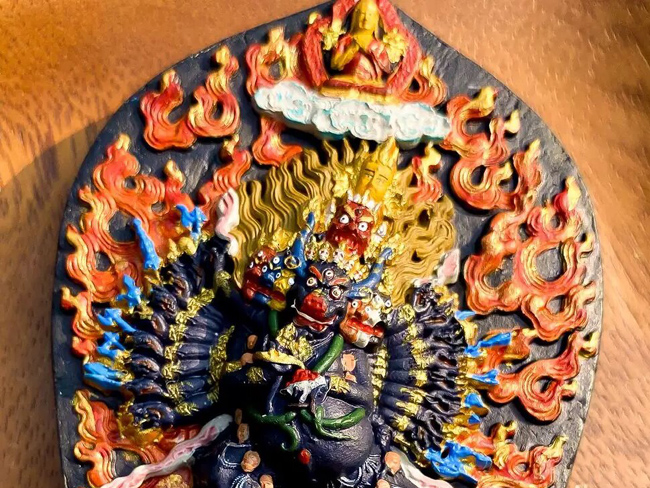
Furthermore, the intricate, sometimes fearsome depictions of deities in Thangkas—adorned with skulls, surrounded by flames—are not meant to invoke terror. They are symbolic representations of the transformation of negative mental states. The wrathful deity is not angry; it is the embodiment of the powerful, uncompromising energy of compassion that cuts through ignorance. Thus, these art forms serve as constant, powerful reminders that the journey to enlightenment involves a radical transformation of perception, where the ordinary world and its passions are seen, in their essential nature, as primordially pure.