Western culture often treats the body and mind as separate entities. We go to the gym for physical fitness and see a therapist for mental health. Shaolin philosophy radically rejects this division. In the Shaolin view, the body is the vessel of the mind, and the mind is the master of the body. Cultivating one without the other is an incomplete pursuit. This holistic approach provides a timeless blueprint for building true, integrated resilience.
Jīběn Gōng (基本功): The Foundation of All Growth
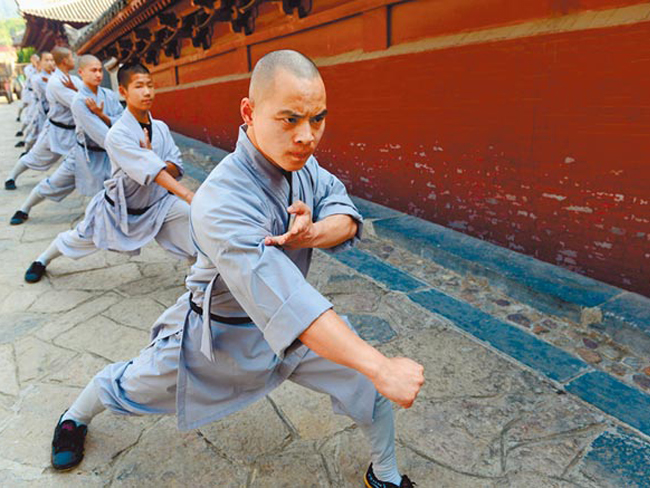
The first years of Shaolin training are dedicated not to flashy kicks, but to Jīběn Gōng—the basic fundamentals. This involves holding deep, painful stances for long periods, repetitive conditioning exercises, and mastering simple movements. It is often tedious and humbling.
This process holds a crucial lesson for the modern seeker of self-improvement: mastery begins with humility and consistent, unglamorous work. In an age of "life hacks" and promises of rapid success, Shaolin reminds us that there is no substitute for a solid foundation. Whether learning a new language, building a business, or improving a relationship, sustainable growth is built on the daily, disciplined practice of the fundamentals.
The Alchemy of Qigong (气功): Managing Your Energy
While Kung Fu (功夫) often refers to skill achieved through time and effort, Qigong is the art of cultivating and managing one's vital energy, or Qì (气). For the modern individual, Qì can be understood as our physical, mental, and emotional energy reserves.
Shaolin Qigong involves slow, deliberate movements coordinated with deep, rhythmic breathing. This practice is a powerful tool for:
-
Stress Recovery: The focused breathing activates the parasympathetic nervous system, counteracting the "fight or flight" response that dominates modern life. It is a direct method to drain the stress from our bodies.
-
Emotional Regulation: By focusing on the body and breath, we create a space between a stimulus (e.g., a stressful email) and our reaction. In that space, we regain choice and control, preventing emotional hijackings.
-
Sustained Vitality: Regular Qigong practice is known to improve focus, sleep quality, and overall energy levels, combating the chronic fatigue so common today.
Resilience Through Adaptation: The Willow and the Oak
A core strategic principle in Shaolin is to be like the willow tree: flexible yet rooted. A rigid oak may snap in a strong storm, but the willow bends and survives. This teaches us that resilience is not about being unbreakably hard, but about being adaptably strong.
In our lives, this means cultivating the mental and emotional flexibility to handle change and adversity. Instead of resisting unexpected setbacks, we can learn to "bend" with them, adapting our plans and perspectives without losing our core values and stability. This "willow-like" resilience allows us to recover from challenges more quickly and emerge stronger.