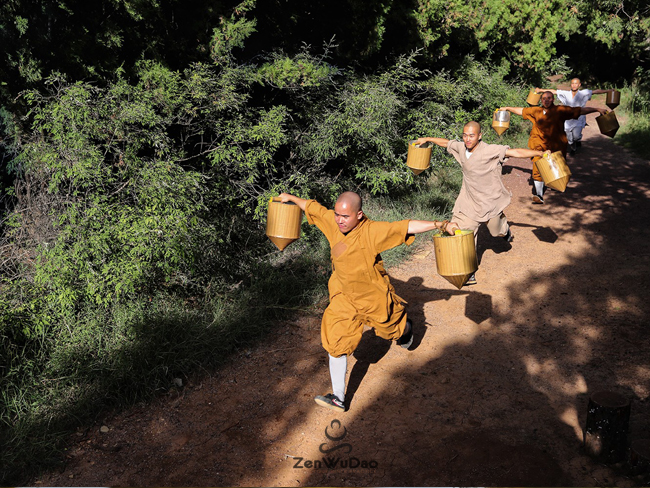
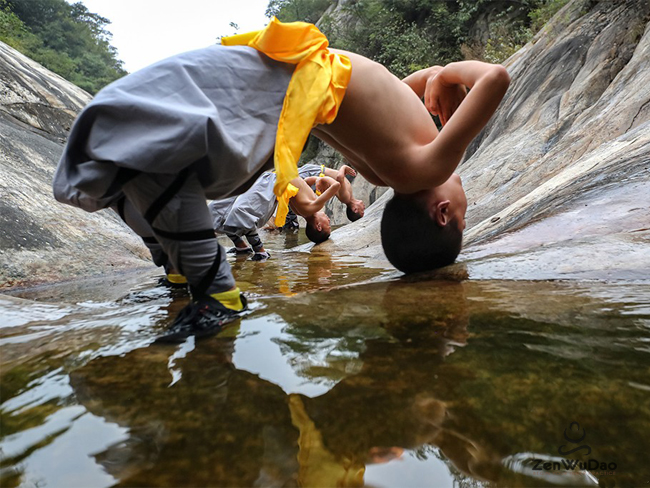
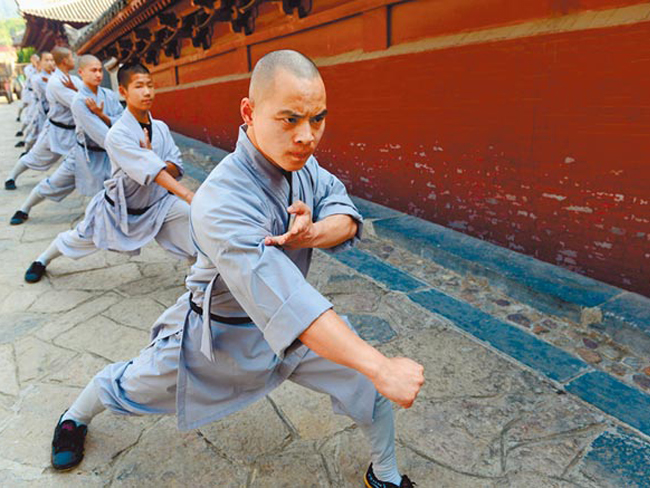
For many in the West, the idea of "Zen" conjures images of silent meditation and monastic seclusion—a state of being that feels distant from the demands of modern life. Shaolin Kung Fu, however, presents a different, perhaps more accessible path: Zen in action. This principle, known as Chán Wǔ Hé Yī (禅武合一), or the unity of Zen and martial arts, offers a powerful framework for finding focus, resilience, and peace not by escaping our busy lives, but by fully engaging with them.
From the Temple to the Modern World: The Challenge of Mindfulness
The core challenge of modern existence is fragmentation. Our attention is constantly pulled in multiple directions by emails, notifications, and endless to-do lists. Traditional seated meditation is a vital antidote, but for many, the idea of sitting still for 30 minutes can feel like an added burden.
This is where Shaolin's "moving meditation" becomes profoundly relevant. In Shaolin practice, the goal is to achieve a state of wú niàn (无念), or "no-mind." This is not a state of blankness, but one of pure, fluid awareness where action and awareness become one. A practitioner does not think, "Now I must block, now I must strike." The body and mind respond spontaneously and correctly to the present moment.
Practical Applications for the Office and Home
How does this translate to a boardroom, a classroom, or a home?
-
Complete Focus on the Task at Hand: When practicing a Shaolin form (tàolù), the mind cannot wander. A moment's lapse in concentration means a loss of balance, power, or precision. Similarly, we can apply this "single-pointed focus" to any task—writing a report, having a conversation, or even washing dishes. By doing one thing at a time with our full attention, we perform better and reduce the stress of multitasking.
-
Embracing the Flow State: Psychologists call it "flow," athletes call it "the zone." Shaolin has cultivated this for centuries. By immersing ourselves completely in a challenging but achievable activity—be it a physical workout, a creative project, or a complex problem at work—we can access that same state of timeless, effortless engagement. Shaolin teaches us to seek out and cultivate these moments.
-
Turning Stress into a Form: A key Shaolin teaching is that the obstacle is the path. A difficult opponent in training is not a distraction from one's practice; it is the practice. Similarly, a tight deadline or a difficult conversation is not an interruption to our peace; it is the very "form" we must practice through. By shifting our perspective, we can meet stress with a calm, focused mind, seeing it as an opportunity to apply our "training" rather than as a threat.
In essence, Shaolin Kung Fu reframes mindfulness as a dynamic, embodied practice. It teaches us that every action, from the most mundane to the most critical, can be an opportunity for Zen practice—a chance to unify our body and mind in the present moment.