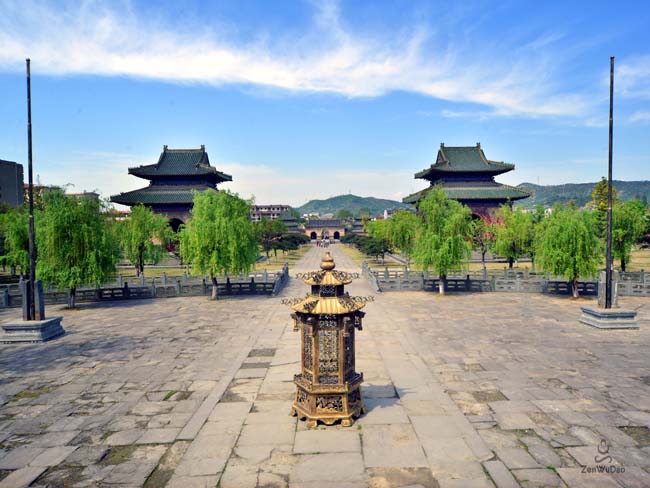
Introduction: The Evolution of a Tradition
The Daoism we have explored so far is a philosophy of nature and effortless living. But when we look at Daoism in China today, we see temples, rituals, gods, and alchemical practices aimed at achieving immortality. How did we get from the abstract Dao of Laozi to the colorful pantheon of Daoist deities? The story of Daoism is one of gradual transformation, where a profound philosophy merged with ancient Chinese folk religion and mystical practices to become one of China's "Three Teachings," alongside Confucianism and Buddhism.
The Formative Period (c. 4th-2nd Centuries BCE)
This was the "Golden Age" of Daoist thought, producing the Daodejing and Zhuangzi. During this era, known as the Warring States period, Daoism existed primarily as a school of philosophy, offering an alternative to the rigid structures of Confucianism. It was a path for individual enlightenment and a political theory for sagely rulers.
The Han Dynasty and the Birth of Religious Daoism (2nd Century CE)
The philosophical system began its transformation into an organized religion during the Han Dynasty. Two major movements were pivotal:
-
The Way of the Celestial Masters (Tianshi Dao): Founded by Zhang Daoling, this is often considered the first organized Daoist religious society. It established a structured priesthood, a pantheon of deities, and communal rituals. It framed Laozi not just as a sage, but as a divine being, the personification of the Dao itself.
-
The Yellow Turban Rebellion: A massive peasant uprising inspired by Daoist millenarian beliefs, seeking to create a "Great Peace" on earth. While the rebellion was crushed, it demonstrated the powerful social and political force Daoism had become.
These movements integrated the philosophical concepts of the Dao, Yin-Yang, and Qi with popular religious practices, shamanism, and the pursuit of physical immortality.
The Great Synthesis and Imperial Patronage (3rd - 10th Centuries CE)
This period saw Daoism flourish and systematize. The arrival of Buddhism from India provided both competition and a catalyst for development. Daoists created their own monastic traditions, inspired by Buddhist models, and expanded their canon of scriptures.
Key developments included:
-
The Shangqing (Highest Clarity) School: Focused on visionary meditation, communication with celestial beings, and elaborate mental journeys through the cosmos.
-
The Lingbao (Numinous Treasure) School: Heavily influenced by Buddhism, it emphasized universal salvation, moral precepts, and complex communal rituals for the living and the dead.
During the Tang Dynasty (618-907 CE), the imperial family, named Li like the supposed Laozi, claimed him as their ancestor and declared Daoism the state religion. This period saw unprecedented growth in Daoist temples, art, and literature.
Internal Alchemy and Modern Era (10th Century - Present)
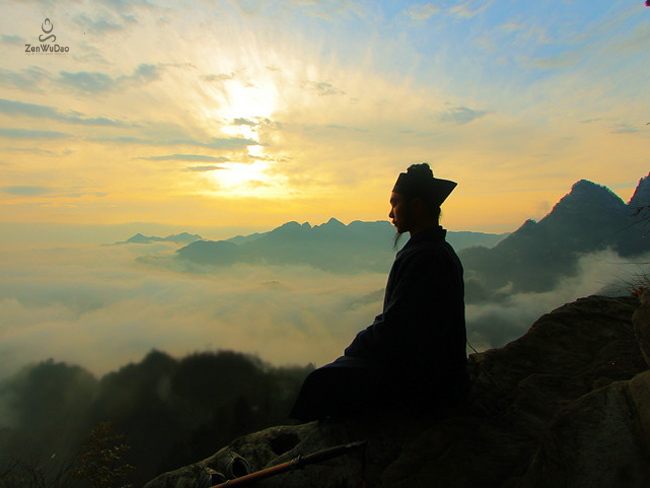
As external alchemy (attempting to create an "elixir of immortality" in a laboratory) often proved fatal, Daoists turned inward. The practice of Neidan (Internal Alchemy) developed. This is a complex system of meditation, breath control, and visualization where the practitioner uses their own body as a crucible to refine their vital essence (Jing), energy (Qi), and spirit (Shen) into an immortal spiritual body.
After the fall of the last dynasty in 1911 and the establishment of the People's Republic in 1949, Daoism, like all religions, faced periods of suppression. However, since the late 20th century, there has been a revival. Temples are being restored, and ordinations are increasing. The Chinese government promotes Daoism as a key aspect of traditional Chinese culture.
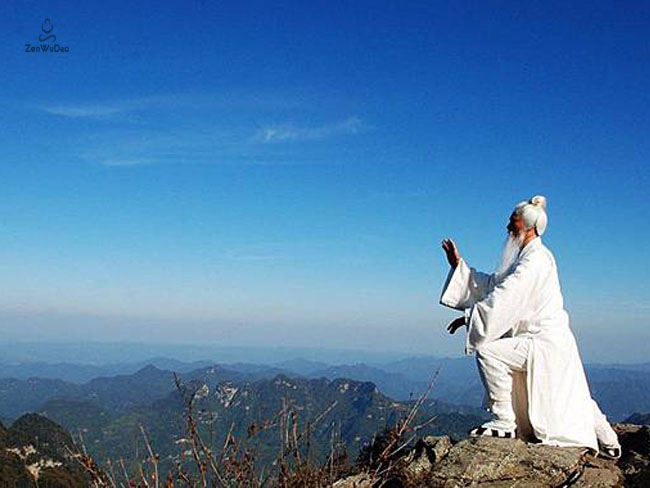
Today, Daoism exists on a spectrum. For some, it remains a profound philosophical guide, as relevant as ever. For others, it is a living religious tradition with rituals, deities, and a goal of transcendence. This historical journey from the musings of a "Old Master" to a world religion is a testament to the depth and adaptability of the Daoist vision.